Style and naming
Style and naming follow shared conventions — snake_case for variables, descriptive nouns for data, verbs for functions. Consistency is what makes code skimmable.

The same program can be written twice: once so it runs, once so it lasts.
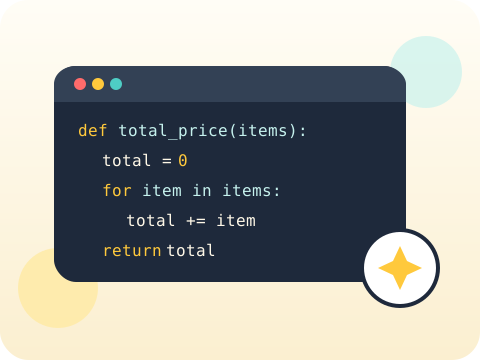
This module raises the standard from working code to professional code — consistent naming, sensible structure, deliberate use of types and operators, and a repeatable routine for tracking down bugs.
Class 8 projects are large enough that sloppy code genuinely slows students down. Fixing habits now saves the whole year.
Three core ideas, each taught with worked examples and then practised until it feels obvious.
Style and naming follow shared conventions — snake_case for variables, descriptive nouns for data, verbs for functions. Consistency is what makes code skimmable.
Types and operators deserve precision: integer division //, remainder %, and knowing when floating-point maths will surprise you.
A debugging workflow beats guessing: reproduce it, isolate it, print or inspect the values, fix one thing, re-test. Every step in order, every time.
In Python, 0.1 + 0.2 does not equal 0.3. It equals 0.30000000000000004 — a consequence of storing decimals in binary that affects every language, not just Python.
“It runs, so it is finished.” Running is the minimum. Readable, testable and explainable is finished.
Sessions 1–8 of the 72-session year, at two one-hour sessions per week.
Where this module fits, what you will build, and a hands-on starter that gets everyone curious about style and naming.
Guided teaching on style and naming, worked through together with the teacher.
Independent practice, small challenges and one deliberate mistake to diagnose.
Guided teaching on types and operators, building directly on the previous two sessions.
Applied tasks that combine style and naming and types and operators in one piece of work.
Debugging workflow introduced and practised, completing the toolkit needed for the project.
Guided build session for the module project: Code quality makeover.
Finish, test against the checklist, present the work and explain the decisions behind it.
Every module ends with something the student built themselves and can demonstrate. This is the piece that goes into their portfolio and gets explained out loud at the end of session 8.
Take your longest program from Class 7 and rewrite it without changing behaviour. Compare line counts and clarity before and after.
Students finishing Module 1 can:
The vocabulary introduced here, in plain language:
6 quick questions drawn from this module — vocabulary, the project you build, and a myth-or-fact round. Every wrong answer explains itself, so a mistake still teaches you something.
Tell us your child’s class and what they enjoy. We will suggest the closest program fit—no pressure and no upfront payment.