Patterns and predictions
Patterns and predictions: the model repeatedly guesses the next most likely piece of text, one small chunk at a time, until the answer is complete.

It is not magic and it is not thinking. It is prediction on an almost unimaginable scale.
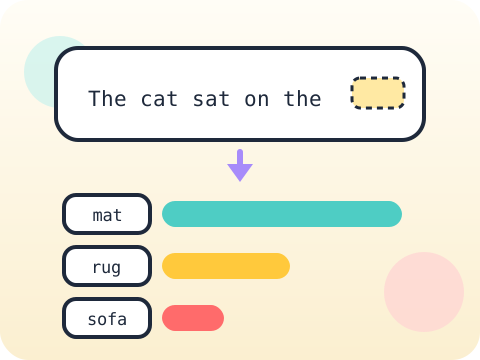
Generative AI predicts what comes next, learned from patterns across enormous quantities of text. Once students understand this one mechanism, both the impressive results and the confident mistakes stop being mysterious.
Understanding how something works is the difference between using it well and being fooled by it. This module makes everything afterwards make sense.
Three core ideas, each taught with worked examples and then practised until it feels obvious.
Patterns and predictions: the model repeatedly guesses the next most likely piece of text, one small chunk at a time, until the answer is complete.
Training data is the vast collection of text a model learned from. What is absent, outdated or skewed in that data shows up in the output.
AI can be wrong because plausible and true are different targets. It is optimised for one of them.
Language models do not store facts like a database. They store statistical patterns — which is exactly why they can produce a fluent, confident, entirely invented answer.
“AI searches the internet for the answer.” Usually it does not. Unless a tool explicitly browses, it is generating from learned patterns.
Sessions 1–8 of the 72-session year, at two one-hour sessions per week.
Where this module fits, what you will build, and a hands-on starter that gets everyone curious about patterns and predictions.
Guided teaching on patterns and predictions, worked through together with the teacher.
Independent practice, small challenges and one deliberate mistake to diagnose.
Guided teaching on training data idea, building directly on the previous two sessions.
Applied tasks that combine patterns and predictions and training data idea in one piece of work.
Why AI can be wrong introduced and practised, completing the toolkit needed for the project.
Guided build session for the module project: Interactive AI myth-vs-fact board.
Finish, test against the checklist, present the work and explain the decisions behind it.
Every module ends with something the student built themselves and can demonstrate. This is the piece that goes into their portfolio and gets explained out loud at the end of session 8.
Ask AI about something extremely local — your street, your school’s history. Watch how quickly plausible invention appears.
Students finishing Module 1 can:
The vocabulary introduced here, in plain language:
6 quick questions drawn from this module — vocabulary, the project you build, and a myth-or-fact round. Every wrong answer explains itself, so a mistake still teaches you something.
Tell us your child’s class and what they enjoy. We will suggest the closest program fit—no pressure and no upfront payment.