Models and datasets
Models and datasets: a model is patterns learned from data. Change the data and you change the behaviour, sometimes drastically.

Under every AI product sit three things: a model, data, and a set of trade-offs somebody chose.
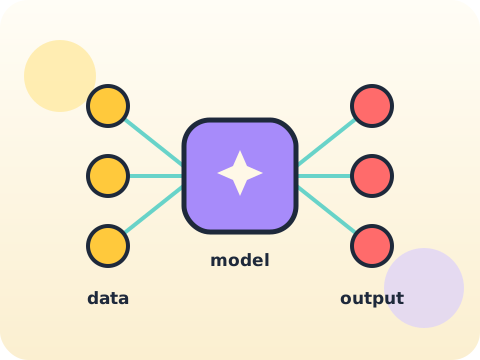
Students build an accurate mental model of how AI systems are assembled — what a model is, what data does, why outputs are probabilistic, and which limits are fundamental rather than temporary.
Applied work needs accurate foundations. Without them, students either over-trust systems or dismiss them entirely.
Three core ideas, each taught with worked examples and then practised until it feels obvious.
Models and datasets: a model is patterns learned from data. Change the data and you change the behaviour, sometimes drastically.
Probability intuition explains why the same prompt gives different answers — the model samples from likely options rather than looking up one stored answer.
Limits and trade-offs are real: speed against quality, cost against capability, creativity against reliability. Every product picks a point.
The “temperature” setting controls how adventurously a model samples. Low temperature gives consistent answers; high gives creative and less reliable ones.
“Bigger models are always better.” Bigger costs more and runs slower. Many production systems deliberately use smaller, faster models.
Sessions 1–8 of the 72-session year, at two one-hour sessions per week.
Where this module fits, what you will build, and a hands-on starter that gets everyone curious about models and datasets.
Guided teaching on models and datasets, worked through together with the teacher.
Independent practice, small challenges and one deliberate mistake to diagnose.
Guided teaching on probability intuition, building directly on the previous two sessions.
Applied tasks that combine models and datasets and probability intuition in one piece of work.
Limits and trade-offs introduced and practised, completing the toolkit needed for the project.
Guided build session for the module project: AI system concept map.
Finish, test against the checklist, present the work and explain the decisions behind it.
Every module ends with something the student built themselves and can demonstrate. This is the piece that goes into their portfolio and gets explained out loud at the end of session 8.
Ask an identical question five times in fresh conversations and compare the answers. The variation is the probability made visible.
Students finishing Module 1 can:
The vocabulary introduced here, in plain language:
6 quick questions drawn from this module — vocabulary, the project you build, and a myth-or-fact round. Every wrong answer explains itself, so a mistake still teaches you something.
Tell us your child’s class and what they enjoy. We will suggest the closest program fit—no pressure and no upfront payment.