
Python Course for Class 9 Students
A project-based 36-week, 72-session Python programming curriculum for Class 9 students, progressing from clear coding foundations to a working year-end application.
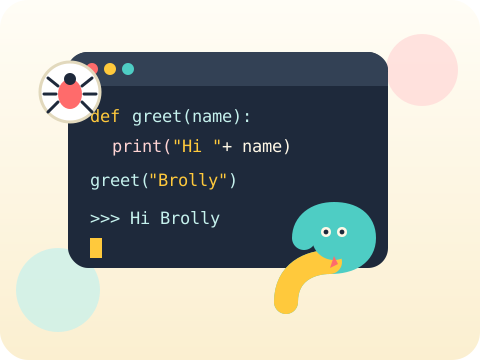
Quick answer
The Class 9 Python program provides two one-hour coding sessions per week for 36 instructional weeks. Every module combines concepts, guided practice, debugging and a project, so learners develop working Python skills rather than merely replicating code.
9 modules × 8 sessions = 72 guided sessions
Select any module to read the full explanation—the big idea, the concepts unpacked, the session-by-session plan and the project students build.
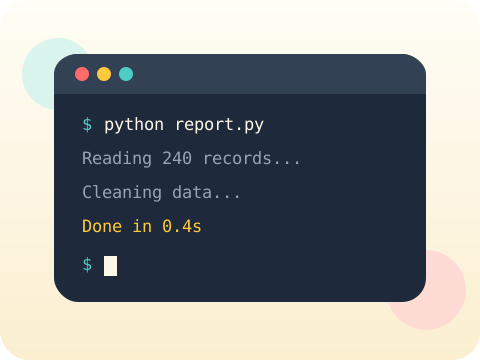
Professional Python Foundations
Time to work the way professionals actually work.
- Environment and files
- Style
- Debugging
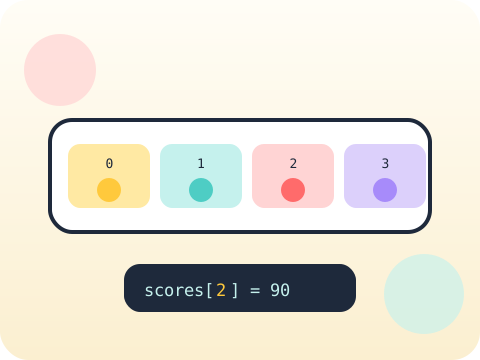
Advanced Collections
Five lines of loop, or one line that says exactly the same thing.
- Comprehensions
- Nested data
- Transformations
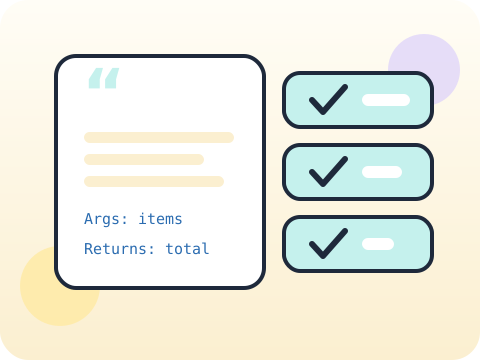
Functions as Interfaces
Write a function once. Document it well. Never think about it again.
- Arguments
- Documentation
- Testing functions
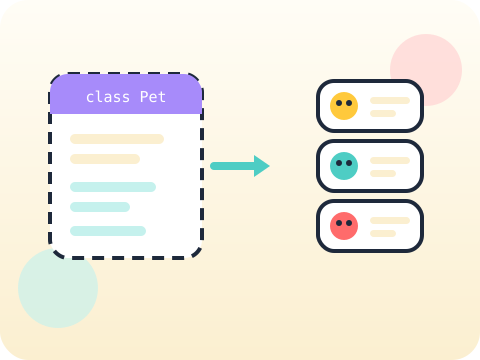
Object-Oriented Programming
Model the world as things that know something and can do something.
- Classes
- Inheritance intuition
- Composition
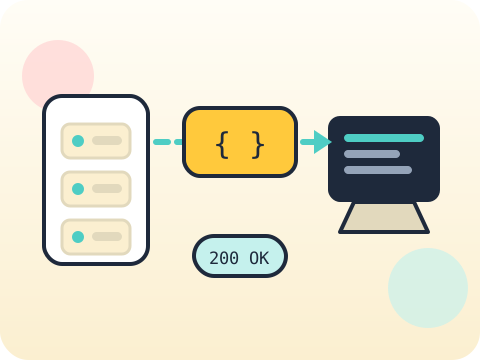
Files, JSON and APIs
The whole internet is programs politely asking each other for data.
- JSON
- Request-response concept
- Handle missing data
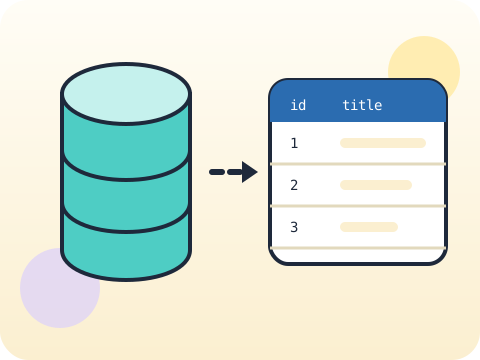
Databases with Python
Files are fine for a hundred records. Databases are built for a million.
- Tables and records
- CRUD concepts
- Safe queries
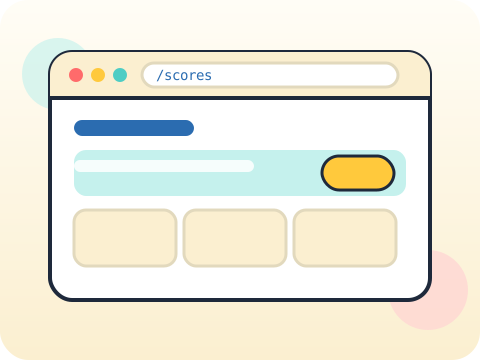
Web App Foundations
Same Python. New audience: anyone with a browser.
- Routes and templates
- Forms
- Validation
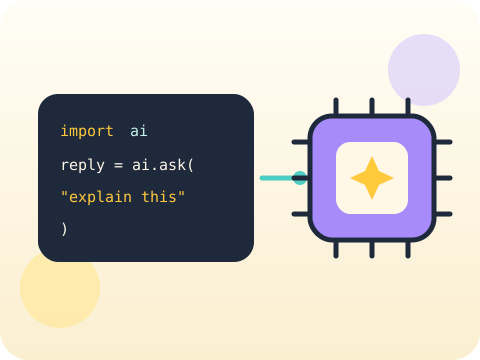
Python and AI Concepts
Your program can now ask an AI model for help. That makes checking the answer your job.
- Use a model responsibly
- Prompt from code concept
- Evaluate output
Class 9 Capstone
Requirements, code, deployment, demo. The full professional cycle in eight sessions.
- Requirements
- Implementation
- Deployment and demo
Year-end outcome
A project the student can explain—not just display. By the end of the year, students can:
- Define the problem or learning goal
- Document important decisions and changes
- Test the output and correct issues
- Present the work and answer questions
Assessment approach
Progress across skills, projects and reflection. Reviews consider understanding, application, originality, accuracy, safety, debugging or verification, and the student's ability to explain their work.
- Module practice and mini-projects
- Mid-year review checkpoint
- Portfolio documentation
- Final capstone demonstration
What families and schools ask
Is this Python curriculum suitable for a Class 9 beginner?
How many Python sessions are included?
Will students build real projects?
Does my child need a laptop?
What are Python classes for kids?
What is the best age to start learning Python?
Is Python suitable for beginners?
What will kids learn in Python classes?
Are Python classes available online?
Are classroom Python classes available in Hyderabad?
What is the Python course fee in Hyderabad?
Are weekend Python classes available?
How long does it take to learn Python?
What projects can kids build with Python?
How can I book a free Python trial class?
Your child's free trial is one message away.
Tell us your child’s class and what they enjoy. We will suggest the closest program fit—no pressure and no upfront payment.